
If you are staring at the calendar counting down to when you can test, you are not alone. “Early detection” is one of the most searched things about pregnancy tests, and also one of the most confusing. Here is what it actually means, how early different tests can really detect a pregnancy, and how to avoid the most common mistake.
What “early detection” actually means
When you get pregnant, your body starts making a hormone called hCG after the embryo implants. hCG can be picked up in urine roughly 7 to 10 days after conception, and the level rises quickly in the first weeks of pregnancy. That is why a test can say “not pregnant” one day and “pregnant” a few days later: the hormone just was not high enough yet.
A test’s sensitivity is measured in mIU/ml, which is the amount of hCG it needs in your urine to show positive. The lower the number, the less hormone it needs, so the earlier it can work. Most standard tests are set at 20 to 25 mIU/ml, and early detection tests go down to around 10 mIU/ml.
How early each test says you can test
These are the brands’ own claims, checked on 6 November 2026. Follow the links to read the fine print yourself.
| Test | Sensitivity | Brand’s early-testing claim |
|---|---|---|
| Clearblue Ultra Early | 10 mIU/ml | Up to 6 days before your missed period (Clearblue counts 79% of pregnancies detected that early) |
| Clearblue Digital Ultra Early | 10 mIU/ml | Up to 6 days before your missed period (75% detected that early) |
| First Response Early Result | Not published by the brand | Up to 6 days before your missed period |
| OVUM Early Detection | 10 mIU/ml | Up to 5 days before your expected period (OVUM publishes per-day accuracy: 77% at 5 days before, 97% at 4 days before, over 99% from 3 days before) |
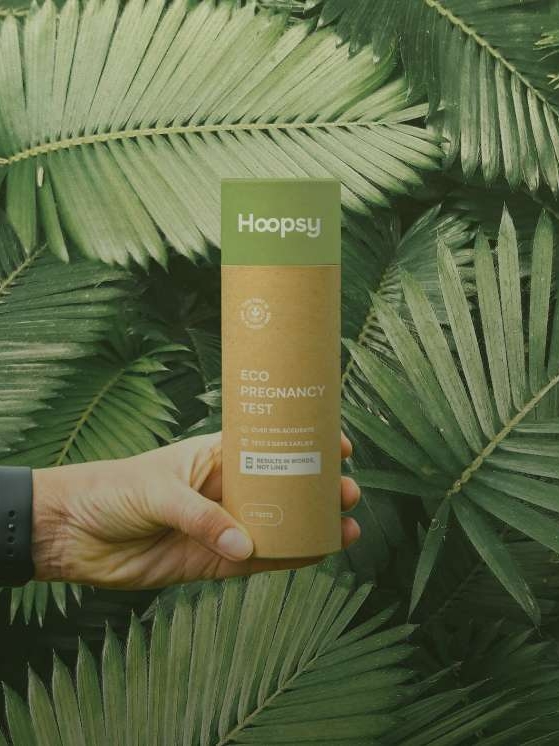
| Hoopsy eco pregnancy test | 20 mIU/ml | Up to 5 days before your period is due |
| One Step test strips | 10 mIU/ml | Before your period is due (brand claim) |
| Clearblue Rapid Detection and most standard tests | 25 mIU/ml | From the day of your missed period |
One thing worth knowing: “6 days before your missed period” sounds a lot earlier than “5 days before your period is due”, but Clearblue’s own fine print defines the missed period as the day after you expect your period. So those two actually mean the same thing.
The honest catch with testing early
Even the most sensitive test does not catch every pregnancy early. Implantation happens at different times for different women, and your hCG might simply not be high enough yet, even with a 10 mIU/ml test. That is why the brands quote percentages: 79% of pregnancies detected 6 days early means about 1 in 5 pregnant women would still get a negative that day.
So if you test early and get a negative, that does not rule out pregnancy: your hormone level may simply not be high enough yet. Follow the instructions that come with your test, and the NHS advice is to wait a few days and test again if you still think you might be pregnant, and to speak to your GP if you get another negative but your period has not arrived. All the midstream tests here state over 99% accuracy from the day your period is due (the strip listing does not state a figure). Using your first wee of the morning helps too, because that is when hCG is most concentrated.
Which early test should you choose?
If testing as early as possible matters most, the most sensitive tests (Clearblue Ultra Early, OVUM, and One Step strips at 10 mIU/ml) have the edge on paper, and strips are cheap enough to test every day without wincing at the cost. If you are happy testing from around 5 days before your period is due and want a midstream test that is eco friendly and 99% plastic-free, that is us. And whichever you pick, the same rule applies: a negative before your period is due does not rule pregnancy out, so test again if your period does not arrive.
About Hoopsy
Hoopsy is on a mission to make healthcare more sustainable—starting with eco pregnancy test kits. Our plastic-free, paper-based hCG pregnancy test strips reduce waste without compromising accuracy. We believe better health starts with better choices—for you, and for the planet.
Learn More About…