
What’s actually hiding in your fragranced lotions? That lovely-smelling lotion can hide hormone-disrupting chemicals behind a single vague word, “fragrance.” You don’t have to bin everything, but learning to read a few key words on the label (and grabbing an app to do it for you) makes a real difference.
The sneaky word on the label
Did you know that companies can write “fragrance” or “parfum” on the label of fragranced lotions and not actually tell you what that fragrance is made from? It’s a legal loophole, the recipe counts as a trade secret, so one little word can stand in for dozens, sometimes hundreds, of separate chemicals you’ll never see listed. And even when they do list things out, you basically need a PhD to decode it (or maybe that’s just me!). Half the ingredients sound like everyday stuff, oranges, shea butter, coconut, which makes it really hard to tell what’s actually fine and what isn’t. Meanwhile, tucked into that “fragrance” blend are often chemicals called phthalates. A super common one is DEP, which is used to make the scent last longer on your skin.
The real problem in scented lotions and potions is the phthalates, which are an endocrine disruptor. How these work is that your hormones (oestrogen, testosterone, and the rest) are chemical messengers that travel around your body telling things when to happen: your monthly cycle, ovulation, sperm production and more. Phthalates are shaped just enough like your real hormones that they slip into that system and either fake the message or block it. What does that lead to? In the research, phthalate exposure is linked to lower sperm count and quality, disrupted hormone levels, which is why it matters most if you’re trying to conceive. Now, to be fair: “one spray of perfume makes you infertile” is a leap nobody has proven. The honest way to think about it is that every scented product adds a little more to your daily chemical load, and less is simply better. There’s also a second, totally separate issue: fragrance is one of the top causes of skin rashes, breakouts, allergies, and stuffy or wheezy reactions. If your skin randomly freaks out, your “lightly scented” everything is a prime suspect.
While you’re reading labels, watch for these too
Sulphates (SLS and SLES). These are the foaming agents that make your shampoo and body wash lather up. Straight talk, so I’m not scaremongering: sulphates are NOT hormone disruptors, and there’s no solid evidence linking them to cancer or infertility. Their real downside is that they’re harsh, they strip your skin
and scalp of natural oils and can cause dryness, irritation, and breakouts, especially if you have sensitive skin or eczema. One extra wrinkle: SLES can pick up a trace contaminant called 1,4-dioxane during manufacturing, which is a probable carcinogen, though good manufacturers strip it out. If your skin’s happy,
sulphates aren’t worth losing sleep over; if it’s reactive, going “sulphate-free” is an easy win. Parabens (methylparaben, propylparaben, and friends), are preservatives with weak hormone-mimicking activity, another small contributor to that daily load. Formaldehyde-releasing preservatives (names like DMDM hydantoin or quaternium-15)are alsofound in some products, they slowly release formaldehyde, a known irritant and carcinogen, and are a common hidden cause of scalp and skin reactions.
How to actually check a product without a chemistry degree
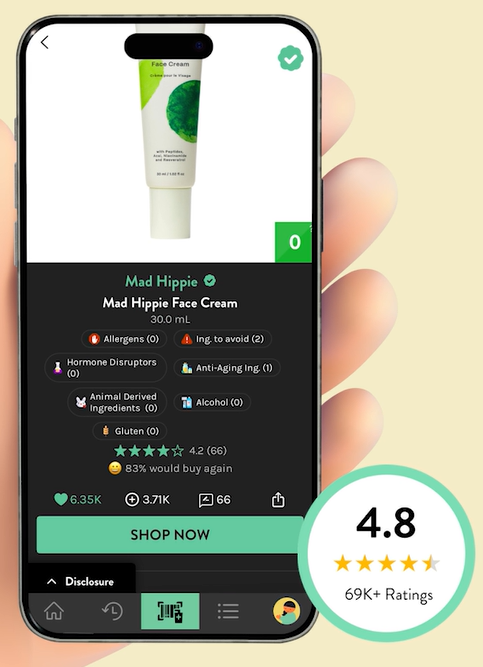 This is where it gets easy. There are apps that scan a barcode or ingredient list of your fragranced lotions and rates the product for you:
★ Think Dirty lets you scan a product and see flagged ingredients with an explanation.
★ EWG’s Skin Deep (and the Healthy Living app) rates ingredients and products from low to high concern.
★ Yuka scans the barcode and gives a quick score plus cleaner alternatives.
One honest caveat so you use them wisely: these apps lean cautious and aren’t perfect (for example, some rate the gentler sulphate, SLES, as “worse” than the harsher one, SLS, which has the science backwards). Treat them as a handy starting point for spotting the big red flags, not as gospel.
What to look for instead
★ The words “fragrance-free” (not just “unscented”, which can sneak in a masking scent to cover a smell).
★ Products that fully list their scent ingredients instead of hiding behind “fragrance” or “parfum”.
★ “Phthalate-free” and, if your skin is sensitive, “sulphate-free” and “paraben-free”.
Is “fragrance” bad? The hidden chemicals behind it genuinely can be, so drift toward fragrance-free, especially if you are trying to get pregnant. Sulphates are more of a skin-irritation thing than a health bomb, and parabens and formaldehyde-releasers are worth dodging too. You don’t need to panic over every nice-smelling bottle in your bathroom, just get a little label-nosy, scan a few things with an app, and swap the worst offenders as you run out.

About Hoopsy
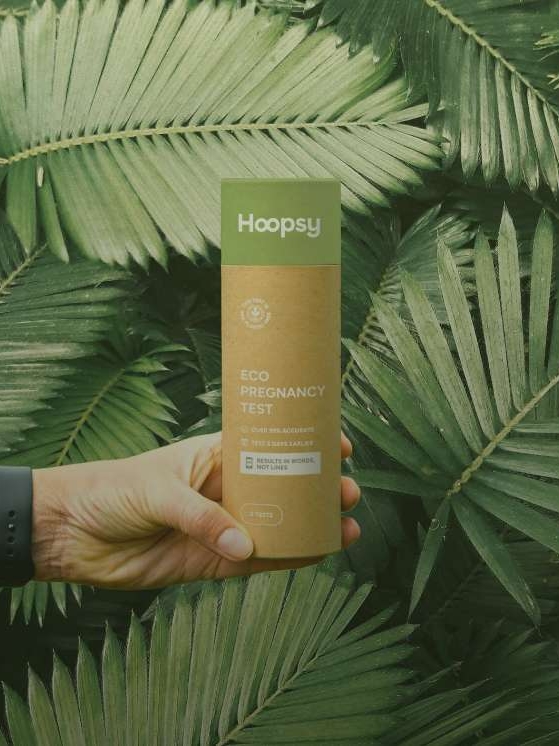
Hoopsy is on a mission to make healthcare more sustainable—starting with eco pregnancy test kits. Our plastic-free, paper-based hCG pregnancy test strips reduce waste without compromising accuracy. We believe better health starts with better choices—for you, and for the planet.
Learn More About…