
In this episode of the Trailblazers Experience Podcast, Lara Solomon, founder of Hoopsy, shares the personal story behind building a sustainability-focused femtech company. The conversation covers IVF, product innovation, fundraising, regulatory complexity, resilience, and what it really takes to keep going as a founder. [file:2]
If you prefer to listen first, you can watch the full interview above, then read the transcript below.
Interview transcript
Introducing Hoopsy
Host: Welcome to another episode of the Trailblazers Experience Podcast, where we have candid conversations with amazing women trailblazers sharing their career journeys. [file:2]
My next guest, really excited because this is front of mind. I think it should be globally in terms of women’s health and contraception is Lara Solomon, who is the founder of Hoopsy. And we are here to talk about Hoopsy.com. [file:2]
Host: Hello, Lara. How are you?
Lara: Hi, I’m good. Thanks for having me. [file:2]
Host: So for people who don’t know, tuning into the podcast for the first time, what is Hoopsy? What does it do and why has that been a passion project that’s turned into a business for you? [file:2]
Lara: Well, I should probably start at the start. So it all started because I did IVF in 2021, trying to get pregnant, I realized that I’d hit 45, hadn’t found anyone to have a baby with, and it was kind of last chance. So I went to Spain and did two rounds of IVF with donor embryo. Unfortunately, the second one didn’t work, but they were miscarried really early on, a couple of weeks after. But in the whole process, I was in a lot of Facebook groups and I kept seeing women talking about, trying to conceive, and then they’d put pictures up of the tests they’d taken. And it wouldn’t just be one test, it would sometimes be 10, sometimes 15 tests, and I was just like, what? I had no idea that women use that many tests. [file:2]
And it just kept sticking in my head, like you literally use this test for five minutes and most of it’s plastic. And I just thought, why is it plastic when you’re using it for five minutes? After my IVF failed, I just thought, I just still couldn’t get this out of my head. And I just thought I could do something about it because the market leader on pregnancy tests is Clearblue. They’re a big corporate company, they don’t care about the planet. [file:2]
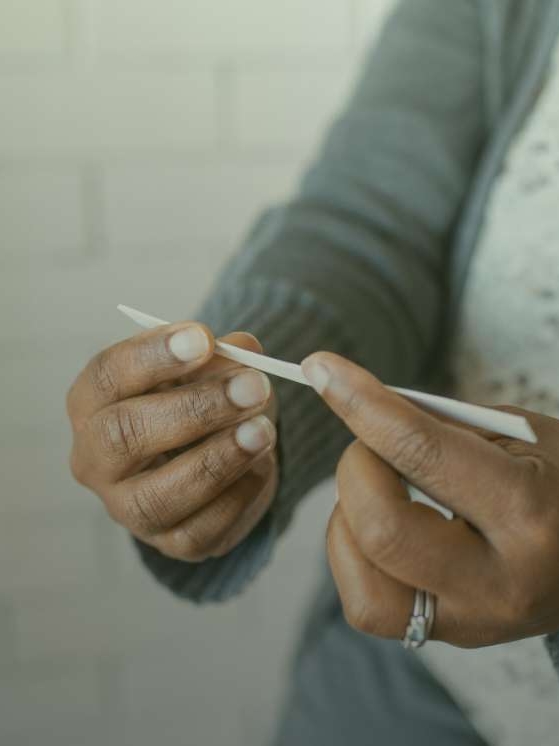
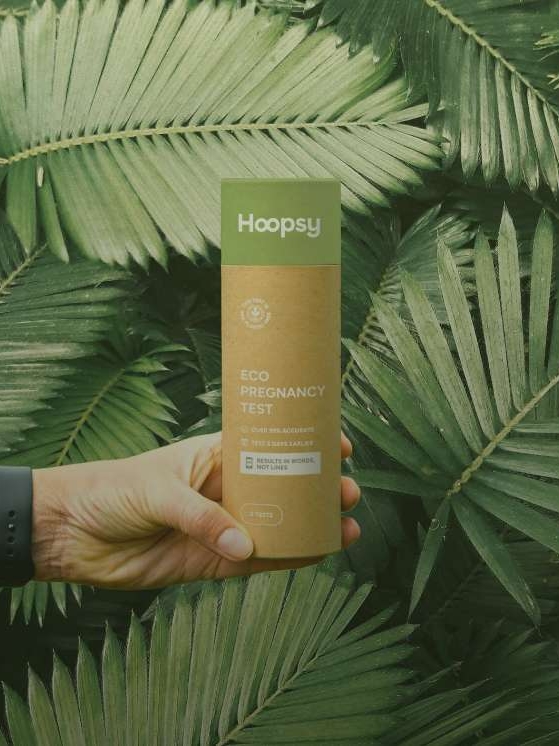
I just thought, someone’s got to do something, why can’t it be me? And so I just did, found a manufacturer and came up with the Hoopsy Eco Pregnancy Test, which is our first product, which is made from 99% paper instead of basically 90% plastic. Works exactly the same way, over 99% accurate, and is a test that you wee on. And then we launched that in the UK in July 22. [file:2]
And then I realized after I launched, looking at the market, I realized it’s not just pregnancy tests that are the problem, it’s all lateral flow tests. So that’s things like drug tests, STI tests, vitamin tests, diabetes, glucose, ketones, and COVID, the list goes on. Globally, every year, 25 million kilos of plastic from those test bays into landfill is a huge problem, and one that no one is doing anything about. So now, at Hoopsy, we’re on a mission to eliminate plastic from lateral flow tests. And that’s a big mission, because there’s over 2 billion tests sold a year, but it’s definitely something that’s worthwhile and something that I’m really passionate about achieving. [file:2]
Why this business stuck
Host: I mean, that’s amazing, having your own personal experience being the spark for this. But this is also not your first rodeo in terms of startups. So this is your sixth venture. Yes. I’m interested to understand what is the, I guess, the curiosity, the catalyst for starting multiple businesses, and why has this one stuck, that you’re saying, this is the one? [file:2]
Lara: Yes, I remember when you asked me about that in the email, I was just like, what’s next? I was like, no, no, no, nothing else. This is it. What I want to do is, once I’ve sold Hoopsy, which won’t be for probably another eight years, then I want to start a VC fund and invest back into women’s health. [file:2]
But anyway, so that’s not really… It’s kind of a business, but anyway, going back to this, all of the businesses, my first business started because growing up, my dad always had his own business, and my dad always taught us to basically think everyone was an idiot until they prove themselves otherwise, which is not necessarily the best outlook, but it did mean that I went into FMCG marketing as my first role, and at that time, you just basically, it was very formulaic, and there was no room for trying anything new, and I just really wanted to try different things. [file:2]
And so I started my first business. I was actually on holiday, on honeymoon at the time, with my now ex-husband, and I saw this mobile phone sock cover, and I just thought, that’s so cool. And so I decided that that’s what I was going to do, because at the time, when you had a mobile phone, there wasn’t covers to fit every style of phone. And so the sock was, you put it on your phone, it stopped from getting scratched, it personalized it. [file:2]
And then from there, basically, other businesses came about out of passions or things that I noticed that, mostly from things I needed, that I then looked into the market, and there was no one else doing it, and other people also needed it. So it’s kind of came out of necessity and passion, I think. But this one, I think, has stuck because I feel like it’s such a global thing. [file:2]
I feel like I really want to make a mark on the world. I don’t mean that I have to be like Florence Nightingale and be talked about for the next hundreds of years, but more about the fact that I often think about what’s the point in us being here? Like, why are we on earth? What are we doing here? Like, what’s the point? It’s not very long. [file:2]
I find that quite depressing thought. So I feel like if while I’m here, I can actually do something that helps the planet, helps the people, then I feel like there is a point of being here. So I guess it all kind of comes down to that. I really want to make a difference. [file:2]
Funding and bootstrapping
Host: For the audience, let’s talk about launching a startup because it’s fraught with challenges. Are you bootstrapped? Talk to me about funding challenges. How has that been, especially when it relates to Hoopsy and you as an entrepreneur? [file:2]
Lara: My first business was funded by my parents. They lent me capital, £6,000. I repaid them in full and gave them around the world trip. So they got a very good return on their investment. Since then, I bootstrapped all my businesses until the last one and this one. [file:2]
So basically with Hoopsy, I bootstrapped to start with. I had a part-time job. I used to do customer service for insurance companies, people wanting to make insurance claims. Worst job in the world, but anyway. And then I raised some money through equity crowdfunding and also through angel investors. [file:2]
The thing is, it depends on your business as to how badly you can, or how much you can, bootstrap. If you’re a service-based business, so it’s just you providing a service, it’s much easier to bootstrap because the only thing you really need is a computer and a phone, which you probably already have. But if you’re a product-based business, you’ve got to buy stock and ship it and store it somewhere and all of that kind of thing, which means it can be quite challenging to actually bootstrap because you need a lot of cash upfront. [file:2]
Which is partly why with this one, I raised the money about nine months after I started working in the business, so just before the first order came through. But I’ve also put in quite a lot of my own cash. So it’s one of those things where people say, you know, it’s better to bootstrap and you don’t have to do investors and stuff, but I think it really depends on who your investors are. [file:2]
A lot of my angel investors are people I know really well. They’re supporting me because they believe in what I’m trying to do and they want it to work. They’re not the kind of people that call me up every day demanding why haven’t I made a million dollars or whatever. So I think it just really depends on who your investors are. [file:2]
And that is one thing I would say with fundraising, you have to be very picky. I have turned down money. My bank account is still whingeing at me for turning it down, but I think it was the right thing to do for the business because it just wasn’t a good fit with what we wanted to do. So yeah, it’s just about being selective. [file:2]
Building in femtech
Host: For someone who’s listening and says, oh my days, right, okay, you’re in the medical, health tech, femtech industry. How do you even go about that? This was a different business from what you’ve done before. Where did you even start in terms of looking at approvals? [file:2]
Lara: I think, well, first of all, I should just say for people listening that I don’t have a medical background or a scientific background. So my background has always been in business. So basically my first thing, I got a pregnancy test and if you open up one of those mystery tests, you’ll see inside this little strip of paper. And when I looked at this and I just thought, why isn’t that piece of paper just big and we don’t have the plastic? They just seemed like a real no-brainer. [file:2]
So then I thought, well, all I need to do, and this sounds quite simple, but this is what I was thinking, all I need to do is work out what size I want it to be and then find someone to manufacture it and if they’re already making pregnancy tests, surely they can just make it bigger. How hard is it? [file:2]
So I drew my test size out on a piece of paper. So my first prototype was literally a rectangle and I then contacted manufacturers around the world. I contacted over a hundred and most people were like, yeah, we can do this and it wouldn’t be what I wanted. It was only one manufacturer that was willing to work with me. [file:2]
And then part of the challenge was that, because I’m not medical or scientific, it was understanding what they were doing, understanding the regulatory approvals. They already had approval for a product that we could use, we could use the approval because we weren’t making a huge change. But then it was understanding whether that regulatory approval was right and how I could use that. [file:2]
So it was a lot of researching, a lot of reading, a lot of phoning people up and finding people that knew people that I could talk to and running things past them, and then trying to look at what other companies have done and see the steps they took to get to market. And there was a lot of Googling, a lot of Googling. [file:2]
The problem with medical devices is that because it is so regulated, you can’t really stuff it up. If you stuff it up, you can’t sell the product. So you actually need to be, there’s not much leeway in there, so you have to really know what you’re doing. [file:2]
So it was a lot of talking to people and experts and some people, paying experts or even just calling up these regulatory bodies for each of the countries, calling them up and just being like a complete, I’ve never done this before, I don’t know what to do, I don’t know what the steps are, and getting them to talk me through it as well. And doing some online courses, paying for them and doing online courses to just educate myself more about it. So yeah, a lot of research and Googling before I could actually get the product to market. [file:2]
The long game
Lara: The first product we had, because the manufacturer already had regulatory approval, I started talking to them in December, we got a product to market in July because they already had approval. We didn’t need to get our own approval. But now we’re working on a new version of the product, which is a hundred percent plastic free. And because it is completely new, that will take us 18 months to two years to get to market because of the approvals. It depends on the country though. [file:2]
So there’s a lot of weighing things up, and then it’s like, well, how easy is it to get FDA approval in the US versus getting approval in the UK or getting approval in the EU? And then it’s finding out things like, if you’ve got FDA approval, and then you want to go to Canada, it’s much easier than going to Canada and then trying to go into the US. [file:2]
I think a lot of it comes down to, until you know all this stuff, you don’t realize how much there is. Someone actually said to me, a potential investor said to me last year, if you’d known all this stuff before you started, would you still have started? And I like to think I would. Some days it drives me up the wall, but I do enjoy a challenge and I do enjoy learning, and I think that that’s part of the journey. [file:2]
Resilience as a founder
Lara: I think if you’re going to give up on the first hurdle, you’re never going to have a successful business because there’s never just one hurdle. There’s so many hurdles to overcome. And we’re now at the stage with Hoopsy where we raised last year, but we ran out of money and last year was a horrendous year to try and raise. I did get offered money, but I turned it down at the time. [file:2]
And so I’m now working part-time because I’m really passionate about what I want to do and really passionate about Hoopsy, and I don’t want to stop doing it. But at the same time, I’ve pretty much burnt through all my savings, so I can’t just live on fresh air. So it’s that compromise and that, are you willing to, in some ways, take a step back to be able to move forward? [file:2]
I think a lot of it, when you’re running your own business, is like that. It is often, you do take a few steps back to take one giant leap forward. And you’ve got to work out if you’re willing to do that compromise as well. Are you willing to give up things? And how important are those things to you? [file:2]
When I did get funding, I was full-time in the business and I was earning a salary, not huge, but then when we ran out of money, it was like, well, I’ve got two choices, either quit and get a full-time job and don’t do Hoopsy or I basically find another way to bring in some money and keep doing it on the side and know that it is a temporary glitch and not a forever glitch. [file:2]
But I think if you’re passionate enough and you believe in what you’re trying to do, then it takes you through and it gets you there. [file:2]
Networking and asking for help
Lara: When I first started Hoopsy, I was living in Australia in Sydney and we basically got approval in the EU before Australia. So I was like, right, we’re going to launch in the UK first. So we launched in July of 2022 and then moved over to the UK in November 2022. I’ve got family here because obviously I’m from the UK originally, but I had been living in Australia for 20 years. So I didn’t have a really good business network. I was basically starting from zero. [file:2]
So when I first moved over, I was staying with family and friends and I did some house sitting and stuff. And I was going to two or three networking events a week, all different ones, just to meet people, get to know people and make those connections. And now I’ve got an amazing network of people around me, but it is work. You do have to actually go out and find it. [file:2]
I personally prefer face-to-face physical networking rather than online Zooming and stuff. And it’s just about putting yourself forward. Every time there’s a pitch competition, I’ll be like, yeah, yeah, I’ll do it. And just putting yourself out there again and again and again, and people get to see what you’re doing. [file:2]
You never know when you’re going to meet people that could be great connections to have. And then I think a lot of it is about going that extra mile, asking for help, putting yourself out there. That’s what people respond to. And I think especially in the entrepreneurial world, a lot of people know what it was like when they started and it was hard, so they’re happy to give back and help other people that are coming up. [file:2]
Community for women founders
Host: Let’s talk about female empowerment and what are ways, if there’s someone who’s listening, who’s an entrepreneur, that they can get into the space or find a community and find their tribe to help them through this journey? [file:2]
Lara: Well, there’s millions of places. I don’t think I’m exaggerating when I say that. I think it’s a case of, it depends what you’re doing in terms of what sector you’re in. And then from there, it depends on what stage you’re at. [file:2]
If you’re really early, things like accelerators are great because lots of them are free. You get to hang out in a cohort with other founders. And that’s really good because you get to learn so much from each other. Also, the first accelerator I did was Outlier, and I just felt like I found my people. [file:2]
So it’s normally about three months long and it depends. It can be part-time. It can be full-time. You do a few hours a week or more and you learn things about business. So it might be things like learning how to identify your customer, learning about how to get a market fit, learning about accounting, learning about how to actually start the company in terms of what you need to register and where. All of that kind of stuff. [file:2]
And also normally you have a mentor as part of that, so someone that you can talk to about any challenges, bounce ideas off. Then there are normally exercises that will actually move your business forward. So it can be a really good way to get to learn more about starting a business as well as build a really good network of people. [file:2]
The other thing, there are loads of online groups. One that I love, which is for women that are a bit further along, is called Buy Women Built. And that’s women-built companies. It’s so supportive and helpful. But you can also start your own. [file:2]
I went to a networking event last year and as I was walking out, I met this lady there. We just hit it off. She later said, oh, I’m starting this WhatsApp group for female founders, and I’m just inviting people that I want to invite that I’ve met, that I think will get on with each other. I’ve been in that group now for about 18 months and that has been so supportive. [file:2]
We’re all in different industries. Some people do products. Some people do services. Some people do digital. Some people do physical products. But the commonality is that we’ve all been through the same stuff. We’ve all done the fundraising journey. We all have that nightmare customer. We all have those days that we just want to curl up and hide under the duvet and cry. [file:2]
So you can completely form your own group. There are also Slack groups, founder communities, and in-person events. But the best thing, I think, is just to go out to some networking events and choose ones where you’ll enjoy it regardless of who you meet, so you know you’ll still get something out of the evening. [file:2]
Trailblazer takeaway tips
Host: So just to finish off the podcast, we always have a section called the Trailblazers takeaway tips. So for someone who’s fast forwarded to the end, what are three Trailblazer takeaway tips you want to leave with them about your journey and being a female founder, just being Lara in general? [file:2]
Lara: I think what we’re talking about now, that asking is a huge hack, because everyone’s always too scared to ask. It’s like, what’s the worst that’s going to happen? They’ll say no. And then it’s not like you’re going to get decapitated or anything bad is going to happen. They’ll just say no. And you’ll be like, okay, next one. [file:2]
I think being yourself is really important in terms of being genuine. I know that’s really trendy now, being genuine and vulnerable and stuff, but people can see through it if you’re trying to be something you’re not. And remember, there’s that old adage about people buy from people they like, people they know, and they trust. [file:2]
And I think the third thing is about just doing something you love, because if you’re doing something you love, it doesn’t feel like work. I mean, no one loves it 100% of the time, don’t get me wrong. But I think when you do stay up late doing stuff, you love it so it doesn’t feel like work. So therefore it just makes life a lot more enjoyable. [file:2]
So I think that would be my hacks: doing what you love, ask, and being yourself. [file:2]
Closing words
Host: Lara, this has been amazing. I mean, Hoopsy.com if you’re looking for your eco-friendly, sustainable pregnancy tests. And as Lara said, supporting a business is not just maybe buying the product, but also supporting it on the socials to get those numbers up so that she can continue to pitch and find investment. It’s been such a pleasure speaking to you, Lara, and just hearing your authentic story. [file:2]
Lara: It’s okay. I’ve really enjoyed chatting. Thank you. [file:2]
Host: So for the audience, this has been the Trailblazers Experience Podcast. I ask one favor, tell another woman about the podcast, because we really want this to be about candid conversations about every aspect of a career journey, whether you’re an entrepreneur, employed, in leadership, whatever sector, we just want to showcase these Trailblazer women. So please remember to follow, share, like, subscribe, and download us on all streaming platforms. Until then, thank you very much. [file:2]
About Hoopsy
Hoopsy is on a mission to make healthcare more sustainable—starting with eco pregnancy test kits. Our plastic-free, paper-based hCG pregnancy test strips reduce waste without compromising accuracy. We believe better health starts with better choices—for you, and for the planet.
Learn More About…