
Is there really a Pregnancy Test Expiry Date?
Yes, pregnancy tests expire, usually 1 to 3 years after they are made. The expiry date is printed on the box and on each test’s foil wrapper, and sometimes on the stick itself. After that date, the test becomes unreliable, so it is worth a quick check before you use one.
A pregnancy test uses tiny antibodies to detect the pregnancy hormone hCG in your urine, triggering the line or the “Pregnant” reading. Those antibodies and the other chemicals slowly break down over time. Once they degrade, the test can no longer reliably detect hCG, so the result you get past the date cannot be trusted.
When companies manufacture pregnancy tests, like us, we have to test the tests to give an expiry date. After that date, they basically haven’t been shown in tests to perform reliably, so they are considered expired. That is not to say they won’t work, but rather that they won’t necessarily give you the correct result.
If you’re testing, check out the Hoopsy eco friendly pregnancy test.
How long do pregnancy tests last?
Most tests are good for about 2 to 3 years from the date they were manufactured (the range across brands is roughly 1 to 3 years). It is not identical for everyone: premium tests often last longer, while cheaper strips can have a shorter life, and a low-quality one can occasionally fail even before its printed date.
Where to find the Expiry Date
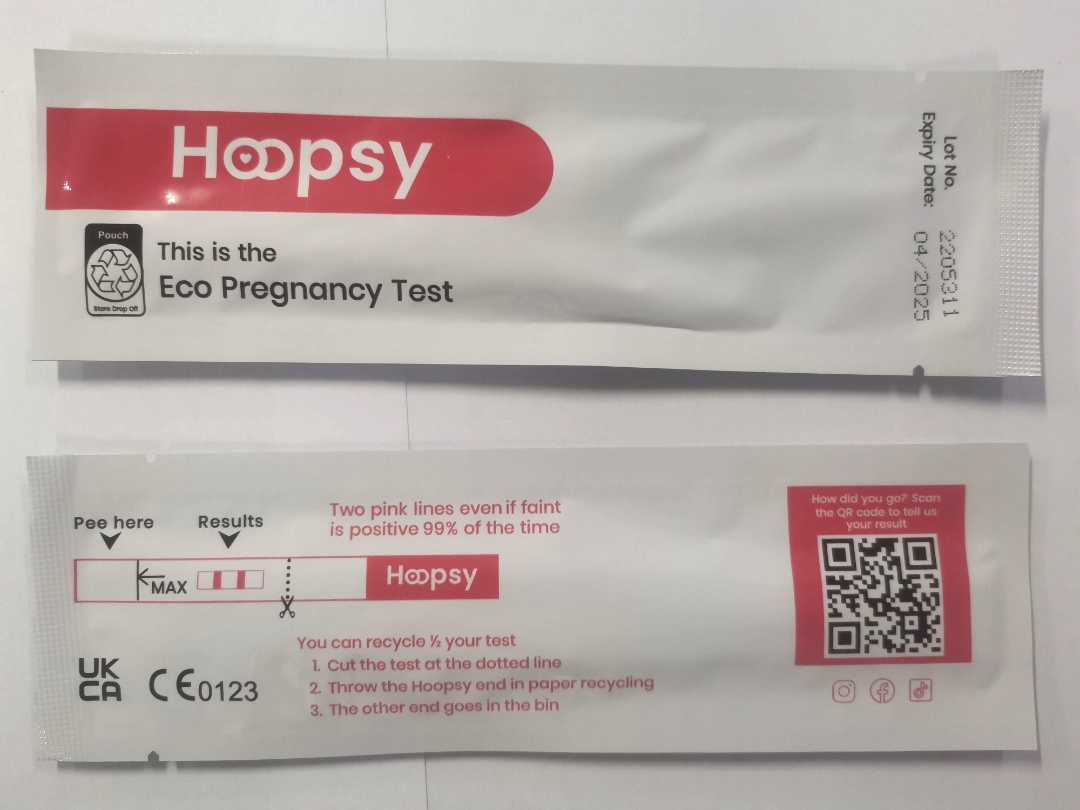 The Pregnancy test expiry date is on all tests. Have a look in these spots to find it
★ The box, usually printed on the bottom
★ The foil wrapper that each test comes in. This is handy because even if you find a stray test with no box, the wrapper still tells you when it expires
★ Sometimes stamped on the test device itself. Look for “EXP” or “Use by” followed by a date
Impact of Using Expired Pregnancy Tests
Using an expired pregnancy test obviously won’t physically hurt you, but it can potentially lead to inaccurate results, which is the last thing you want when taking a test!
As the test components degrade over time, it may not be able to detect hCG effectively or may produce false positive or false negative results. False positives can occur when an expired test incorrectly detects hCG in the absence of pregnancy. While false negatives may fail to detect hCG when a pregnancy is present.
Both scenarios can cause confusion, anxiety, and potential delays in seeking appropriate prenatal care.
Storage matters more than you think
Heat and humidity speed up that chemical breakdown, which means the steamy bathroom is honestly the worst place to keep a test, even though it is where most of us stash them. Store tests somewhere cool and dry, like a bedroom drawer or a linen cupboard, and do not unwrap a test until you are actually ready to use it. Most tests say store at room temperature up to 30 degrees celcius, and not below 4 degrees celcius, so try and stick to this if you can, as bad storage can spoil your test even before the printed date.
A quick buying tip
Check the date on the box in the shop, not just at home. Give yourself several months of leeway so your spare does not quietly expire in the drawer before you need it. If you are buying online you can always ask what the expiry date is on the tests so that you don’t get any surprises. We list it on the product page so that you can see.

About Hoopsy
Hoopsy is on a mission to make healthcare more sustainable—starting with eco pregnancy test kits. Our plastic-free, paper-based hCG pregnancy test strips reduce waste without compromising accuracy. We believe better health starts with better choices—for you, and for the planet.
Learn More About…