
Short answer: yes.
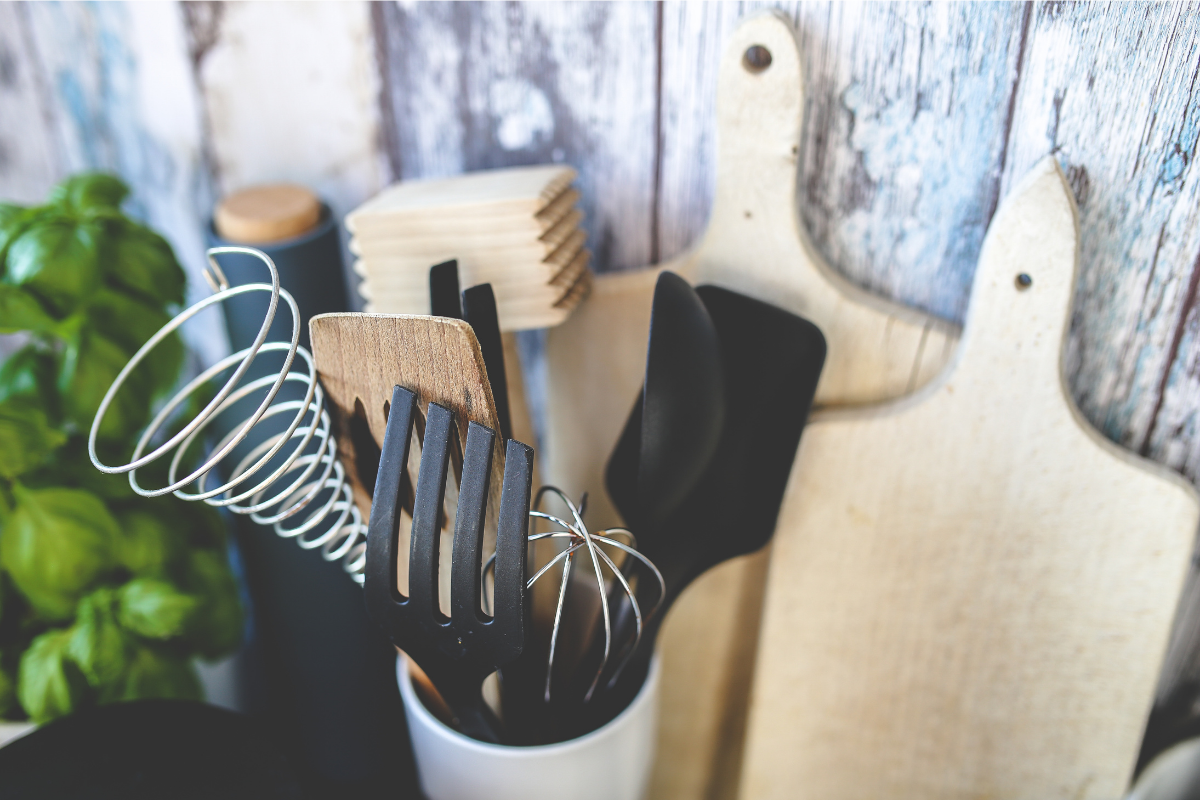 When plastic kitchen utensils are used for food, such as a spatula, strainer, flipper, or spoon, plastic will leach into the food. This can happen whether the utensil is hot or cold, but when it’s hot, a higher amount of chemicals moves into the food. Obviously, you can’t actually see this happening, which makes it really hard to know what is and isn’t bad. So let me walk you through what’s going on.
Here’s what happens when plastic heats up
Plastic isn’t one solid, locked-up thing. It’s a tangle of long chains with a bunch of “extra” chemicals mixed in to make it soft, bendy, or heat-resistant, things like plasticisers (the big family here is called phthalates) and, in some hard plastics, a chemical called BPA. Those add-ins aren’t bolted down. They sit in the plastic like sugar stirred into water, and they slowly migrate out, especially into anything fatty, oily, or acidic that’s
touching them.
Add heat, and you basically shake the jar. The plastic’s grip loosens, the molecules get jittery, and more of those chemicals break free and move into your food. So your cold leftovers in a tub are leaching a little; that same tub in the microwave, or that plastic spoon stirring a hot curry, is leaching a lot more. You can’t see it, taste it, or smell it, which is exactly why it’s so easy to ignore.
Why are these chemicals a problem?
Phthalates and BPA are what scientists call endocrine disruptors. In plain English, your hormones are chemical messengers that tell your body what to do (grow, ovulate, make sperm, regulate your cycle), and these chemicals are shaped just enough like your real hormones to sneak into the system and scramble the messages. In the research, they’re linked to things like lower sperm quality, messed-up hormone levels, and
reproductive problems. You’re not going to drop dead from one plastic spoon; nobody’s saying that. The issue is the slow daily drip, year after year, from every plastic thing that touches your food.
The worst offenders
A few situations crank the leaching way up, so these are the ones to kill first:
★ Anything plastic that gets hot. Spatulas in a hot pan or spoons in boiling sauce. Heat is the accelerator.
★ Scratched, cloudy, or old plastic. Once the surface is worn or scraped, it sheds even more. If your containers are foggy and scratched, that’s your sign.
★ Fatty and acidic foods. Oil, tomato sauce, citrus, and vinegary stuff pull chemicals out faster than, say, water.
★ Black plastic utensils, especially. A 2024 study found many are made from melted-down old electronics, which means they can carry flame-retardant chemicals on top of everything else. At the time a viral headline told everyone to bin them that second, then scientists caught a maths error and walked the panic back, so the risk is smaller than the scare suggested, but it’s still recycled junk you don’t need near dinner.
What to use instead
Good news, swaps for plastic kitchen utensils are cheap, and they last basically forever:
★ Stainless steel for spoons, strainers, flippers, and storage. Leaks nothing, lasts decades.
★ Wood or bamboo utensils. They won’t scratch your pans and won’t leach plastic. Just replace them if they crack or get mouldy.
★ Glass containers for storing and reheating. The gold standard, and you can actually see when they’re clean.
★ Silicone for things like spatulas and lids is a solid middle option and miles better than plastic (there’s a whole separate post on that one).
What About Silicon Utensils?
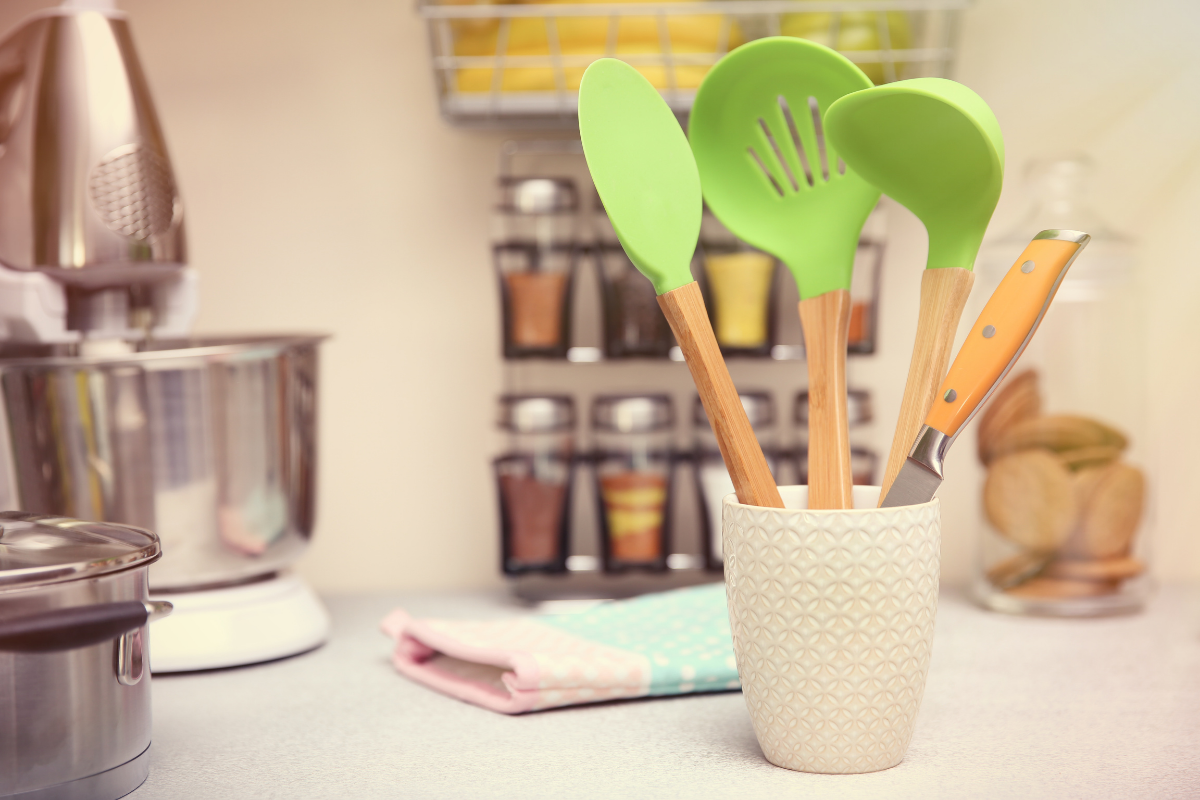 Silicone cooking utensils are generally considered safe when they’re high‑quality, food‑grade silicone and used within their temperature limits, but the long‑term data isn’t perfect, and cheap, filler‑heavy products are worth avoiding.
Silicone is a synthetic rubber made from silicon and oxygen, sometimes with carbon and other additives, designed to be flexible, heat‑resistant, and non‑reactive. Food agencies such as the FDA and Health Canada treat food‑grade silicone as safe for contact with food and drinks within recommended temperatures, and it has been used in cookware and bottle nipples for decades. There is very little evidence that good‑quality food‑grade silicone is harmful under normal kitchen use, but there’s also limited long‑term research specifically on silicone cookware. The biggest safety issue isn’t “silicone” in general, but cheap products with fillers and additives. Guides from environmental health groups recommend looking for “100% food‑grade” or medical‑grade silicone, avoiding products that smell strongly chemical, and using simple home tests: twisting or pinching the silicone, and if it turns white, that often indicates fillers rather than pure silicone. Pure, high‑quality silicone is less likely to leach, while low‑quality items may release more volatile compounds, especially when overheated or degraded.
Bottom line
Should you toss your plastic kitchen utensils? Yes, especially anything that touches heat, anything scratched and old, and any black plastic. You don’t have to panic-replace your whole kitchen in one afternoon, but every plastic spoon, tub, and spatula you swap for steel, wood, or glass is one less daily dose of hormone-disrupting chemicals in your food. Start with the stuff that gets hot, and work your way down.

About Hoopsy
Hoopsy is on a mission to make healthcare more sustainable—starting with eco pregnancy test kits. Our plastic-free, paper-based hCG pregnancy test strips reduce waste without compromising accuracy. We believe better health starts with better choices—for you, and for the planet.
Learn More About…