
The short answer to whether non-stick pans are bad for you is that the non-stick coating, which means your food doesn’t burn to the bottom, is a “forever chemical’, which is ok if it never gets scratched or damaged. From an intact or new pan, you get very few chemicals into your food. The bigger issue is what these chemicals do once they’re in your body and in the water, plus what happens when a pan is overheated or scratched. Here’s the full picture so you can weigh it all up….
The Coating on Non-Stick Pans
The slick surface on your non-stick pan is PTFE, which belongs to a family called PFAS, nicknamed “forever chemicals” because they break down slowly and accumulate in your body over time, causing health issues.
But didn’t that get banned?
The chemical that governments banned was PFOA. It has now been phased out of cookware worldwide (it’s restricted under the global Stockholm Convention). That matters because PFOA and PFAS as a group are linked in large human studies to kidney cancer, testicular cancer, thyroid disease, high cholesterol, a weaker immune response, and, relevant to parenthood, reduced fertility in both men and women, pregnancy-induced high blood pressure, and lower birth weight. So great, one bad chemical was banned and was replaced with one not so bad?
What does that mean for the actual pan in your kitchen?
The chemical coating on your pan is tightly bound, so from a normal, undamaged pan at normal cooking heat, very little makes it into your food, and studies of cooking on intact Teflon haven’t shown clear harm. Two things change that:
★ Overheating. Past about 260°C (500°F), an empty pan on high heat starts breaking down and releasing fumes that cause flu-like symptoms in people (“Teflon flu”) and can kill pet birds quickly.
★ Scratches. Once the coating is scraped, it sheds tiny PTFE and plastic particles straight into your food. And even if your pan behaves perfectly, making and disposing of PTFE spreads PFAS into water and soil, which is how these chemicals end up in nearly everyone’s blood in the first place.
What to use instead
 – Stainless steel: nothing leaches, and it handles the high-heat searing
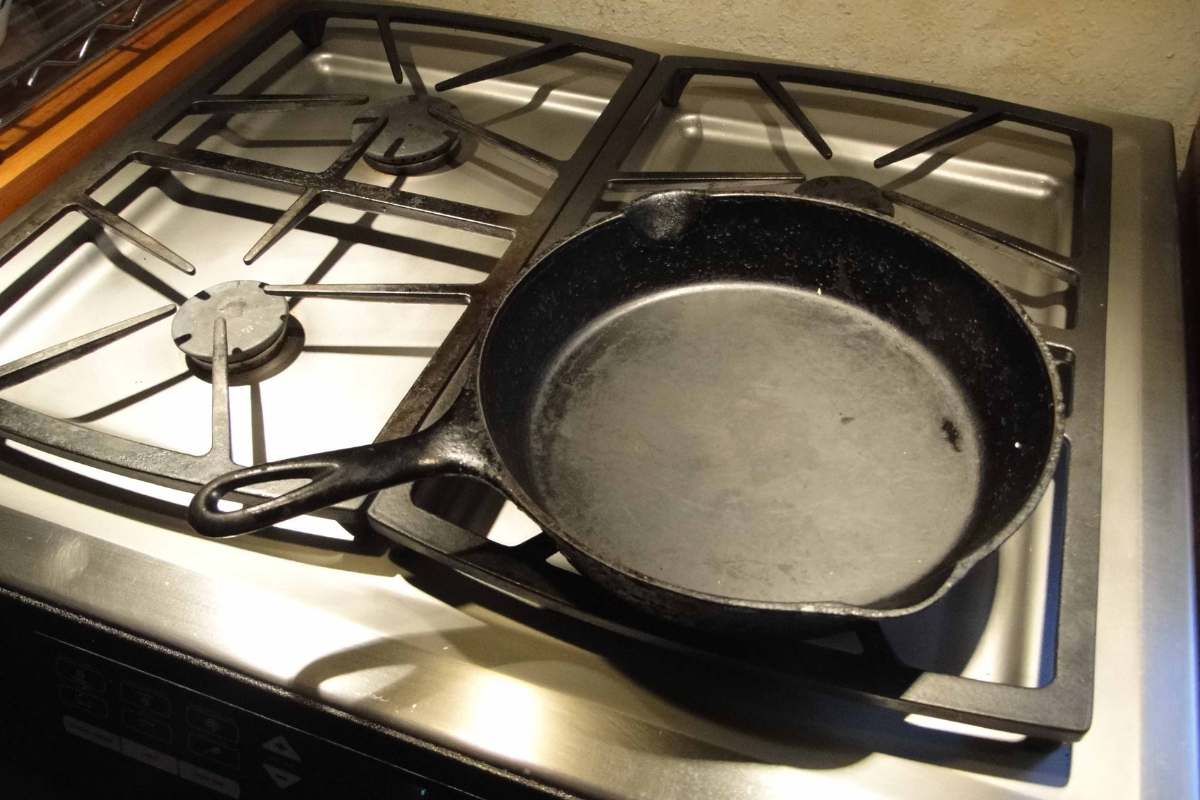
– Cast iron: naturally non-stick once seasoned, lasts for generations, and as a bonus it adds a little dietary iron
– Ceramic-coated: PTFE-free, though the coating still wears out over time, so treat it gently
An intact, gently used non-stick pan puts little into your food, and the truly notorious processing chemical is gone from new cookware. But the coating is still a PFAS, a group with strong human links to cancer, thyroid disease, and reduced fertility, and overheating or scratching a pan releases more. Your best plan is if you have a non-stick pan and it get scratched replace it with a stainless steel or cast iron one, and if you are shopping for new pans choose stainless steel or cast iron. All these chemicals can really add up in your body, so reducing exposure in easy ways, like how you cook, can really help.

About Hoopsy
Hoopsy is on a mission to make healthcare more sustainable—starting with eco pregnancy test kits. Our plastic-free, paper-based hCG pregnancy test strips reduce waste without compromising accuracy. We believe better health starts with better choices—for you, and for the planet.
Learn More About…