
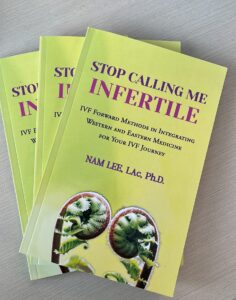
I’ll be honest—when I picked up Stop Calling Me Infertile by Dr Nam Lee I wasn’t quite sure what to expect. What I found was something a little different from your typical fertility book, and whether you love it or not really depends on what you’re looking for.
The book is made up of 18 chapters, and each one is essentially a short interview with a different doctor or medical practitioner. Think of it less like a textbook and more like a collection of mini magazine features. Each chapter stands on its own, which means you can absolutely skip around and dip in and out rather than reading it cover to cover.
 It covers a lot of ground
The scope is genuinely broad. Fertility here means everything from trying to conceive naturally, navigating IVF, managing PCOS, planning for future fertility, and postpartum care. Topics covered include nutrition, supplements, acupuncture, communication, and some things I genuinely hadn’t come across before, like red light therapy. I’d never read anything specifically linking that to fertility before, so there were some real “huh, I didn’t know that” moments along the way.
That said, while the range is impressive, the depth is pretty light. Each chapter gives you a flavour of a topic rather than a full deep dive. So if you’re hoping to walk away with a complete picture of, say, how a plant-based diet impacts IVF outcomes versus other nutrition approaches, you won’t get that level of detail here. It’s more of a “this is a thing worth knowing about—now go and explore it further” kind of read.
It doesn’t tell you what to do, which is both good and a bit frustrating
The author doesn’t compare approaches or steer you toward any particular path. Each chapter is just that practitioner’s perspective, and while the chapters don’t necessarily contradict each other, you’re left to figure out for yourself what makes sense for your situation.
If you like having options laid out in front of you and making your own decisions, you’ll probably appreciate that. If you’re looking for someone to just tell you what to do, you might find it a little unsatisfying. I personally landed somewhere in the middle—I liked that it respected my ability to think for myself, but occasionally I wanted a bit more guidance on how to weigh one approach against another.
The “contact the doctor” sections are useful, but a little salesy
At the end of each chapter, there’s a section on how to connect with the featured practitioner. I found this helpful in theory—if a chapter resonated with me, I could actually follow up. But I’ll admit it sometimes felt a tiny bit like an infomercial. It’s a fine line between a useful resource and a promotional tool, and this book occasionally tiptoes along that line.
My favourite part: the “why” behind each practitioner
The thing I liked most—and didn’t expect—was how much space each chapter gives to the story of why that practitioner does what they do. Usually, with doctors, you hear about where they studied, how long they’ve been practicing, and that’s about it. But here, each practitioner talks about what inspired them to specialise in their area.
One that stuck with me: a practitioner who personally dealt with food sensitivities and allergies, and that experience shaped how she approaches fertility. That kind of insight is rare in medical writing, and it made each chapter feel genuinely human. Running through all of it is Dr. Lee’s (the author’s) own connection to each person, and you get a real sense that she works across many different areas of fertility and deeply values the people she collaborates with. The common thread across every chapter is that these practitioners actually care; patients aren’t just numbers to them.
So, should you read Stop Calling Me Infertile?
I’d say yes—but go in with the right expectations. This isn’t a “here’s your fertility bible, follow these steps” kind of book. It’s more of a reference guide that opens doors. It’ll introduce you to approaches you might not have considered, give you a sense of who’s out there working in this space, and help you figure out what questions to ask next.
For me, it was a solid starting point, just not the ending point. And sometimes that’s exactly what you need.
If you are looking for other fertility books, check out
About Hoopsy
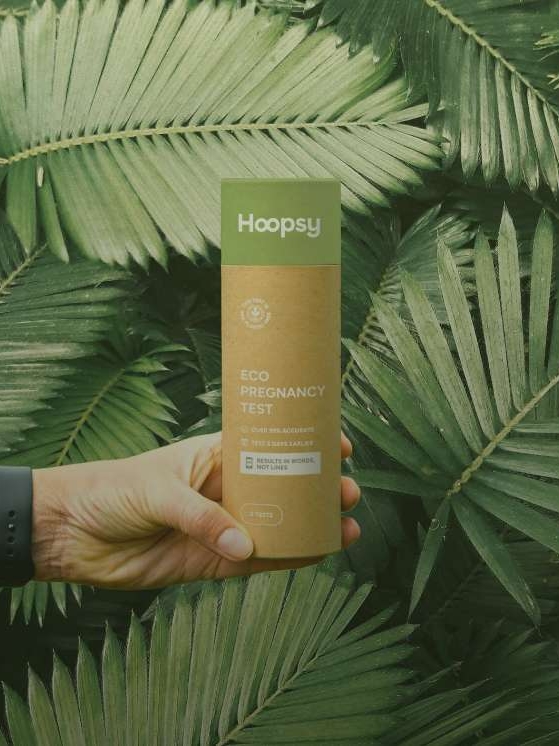
Hoopsy is on a mission to make healthcare more sustainable—starting with eco pregnancy test kits. Our plastic-free, paper-based hCG pregnancy test strips reduce waste without compromising accuracy. We believe better health starts with better choices—for you, and for the planet.
Learn More About…